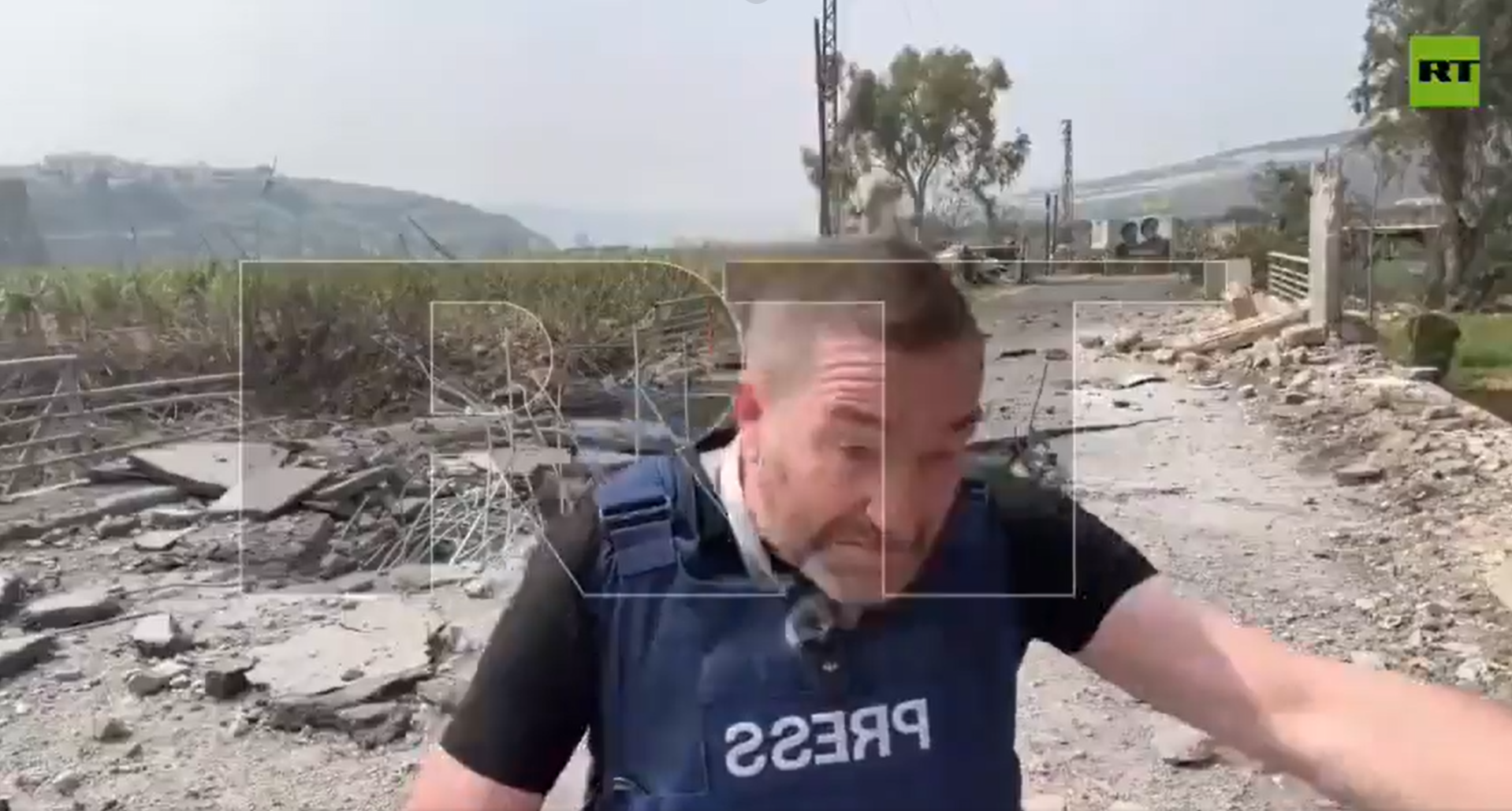
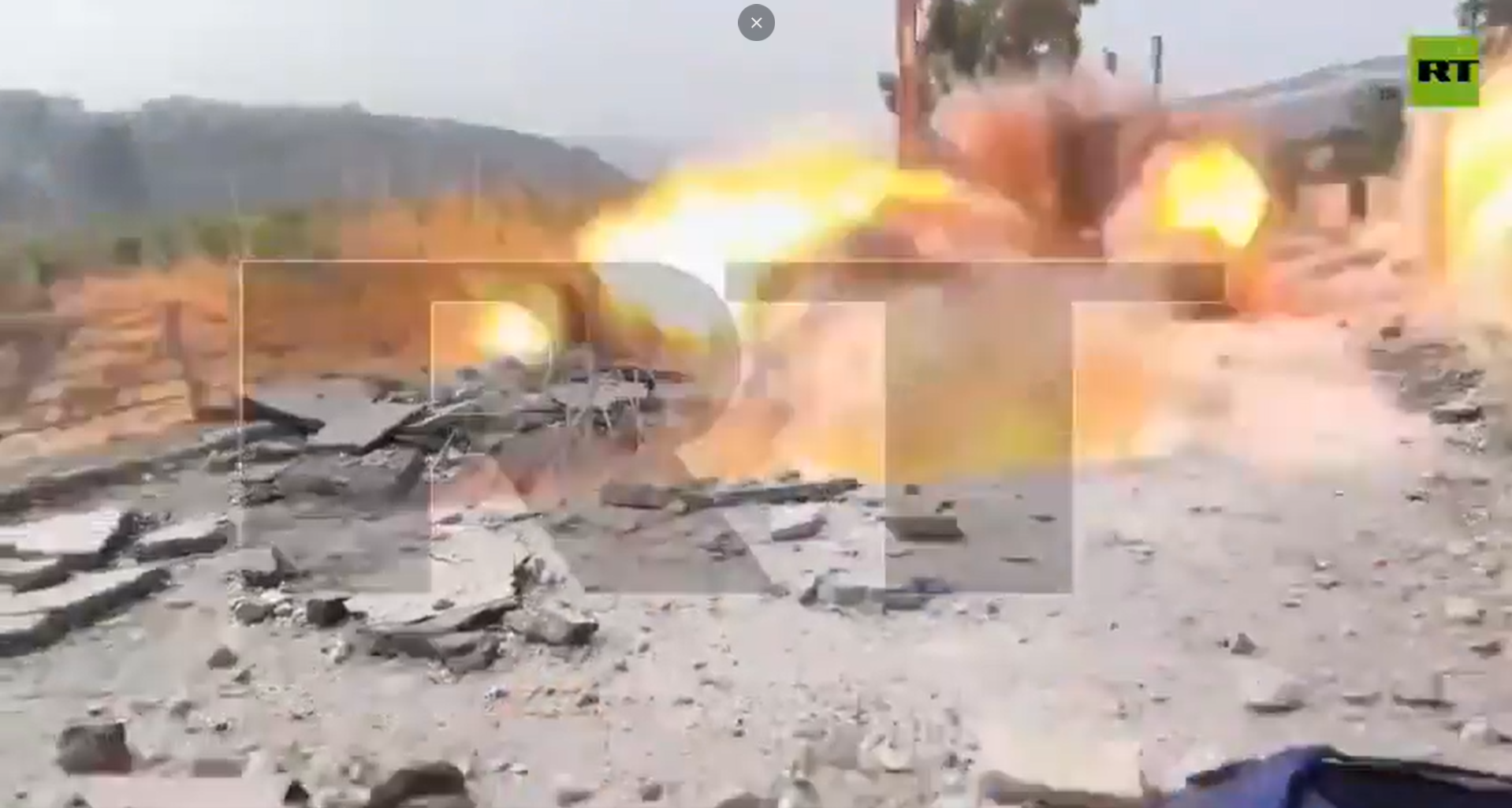
A missile has landed metres from a reporter crossing live for a Russian network on the war in Lebanon.
RT correspondent Steve Sweeney can be seen beginning to duck for cover as the noise of the incoming missile is heard in the background of his broadcast on Thursday.
Within a second, the projectile hits the ground close behind him, causing an explosion that sends dirt, dust and shrapnel into the air and apparently knocks over both the reporter and cameraman Ali Rida.
READ MORE: Trump threatens to 'blow up' world's largest gas field
 https://x.com/M_Simonyan/status/2034586390395023699
They'd been reporting on the destruction of a bridge in southern Lebanon, which Israel has been bombing in its war with the Iranian-backed Hezbollah militant group.
In a later video for RT, Sweeney claimed the missile was "an Israeli precision strike from a fighter jet".
"We've been treated in hospital for our injuries," the Briton said.
"I had a shrapnel wound in my arm, deeply embedded in the bustle here that's been taken out, and here it is in this pot here."
RT, formerly known as Russia Today, was banned in the European Union in 2022 for systematically broadcasting disinformation about Russia's invasion of Ukraine.
The strikes in Lebanon have displaced more than 1 million people — roughly 20 per cent of the population — according to the Lebanese government.
READ MORE: 'Stay indoors': Worst cyclone in 100 years bearing down
It says more than 1000 people have been killed and Israel says it has killed more than 500 Hezbollah militants.
In Israel, 15 people have been killed by Iranian missile fire.
Four people were also killed in the occupied West Bank overnight by an Iranian missile strike, according to officials.
Iran intensified its attacks on oil and natural gas facilities around the Gulf on Thursday, raising the stakes in a war that is sending shock waves through the global economy.
READ MORE: Tears after sex with student she should have been teaching
https://x.com/RichardEngel/status/2034606247182311694The strikes, in retaliation for an Israeli attack on a key Iranian gas field, sent fuel prices soaring and risked drawing Iran's Arab neighbours directly into the conflict.
Tehran's targeting of energy production further stressed global supplies already under pressure because of Iran's stranglehold on the Strait of Hormuz, a strategic waterway through which a fifth of the world's oil is transported.
Since the US and Israel launched the war on February 28, Iran's top leaders have been killed in airstrikes and the country's military capabilities have been severely degraded.
Still, Iran — now led by the son of the supreme leader killed in the war's opening salvo — remains capable of missile and drone attacks rattling its Gulf Arab neighbours and a global economy dependent on the energy they produce.
- Reported with Associated Press
NEVER MISS A STORY: Get your breaking news and exclusive stories first by following us across all platforms.
- Download the 9NEWS App here via Apple and Google Play
- Make 9News your preferred source on Google by ticking this box here
- Sign up to our breaking newsletter here
from 9News https://ift.tt/ENUb5h6
via IFTTT
Comments
Post a Comment